Role: Brand Designer, Signage Designer, Documentation
opportunity
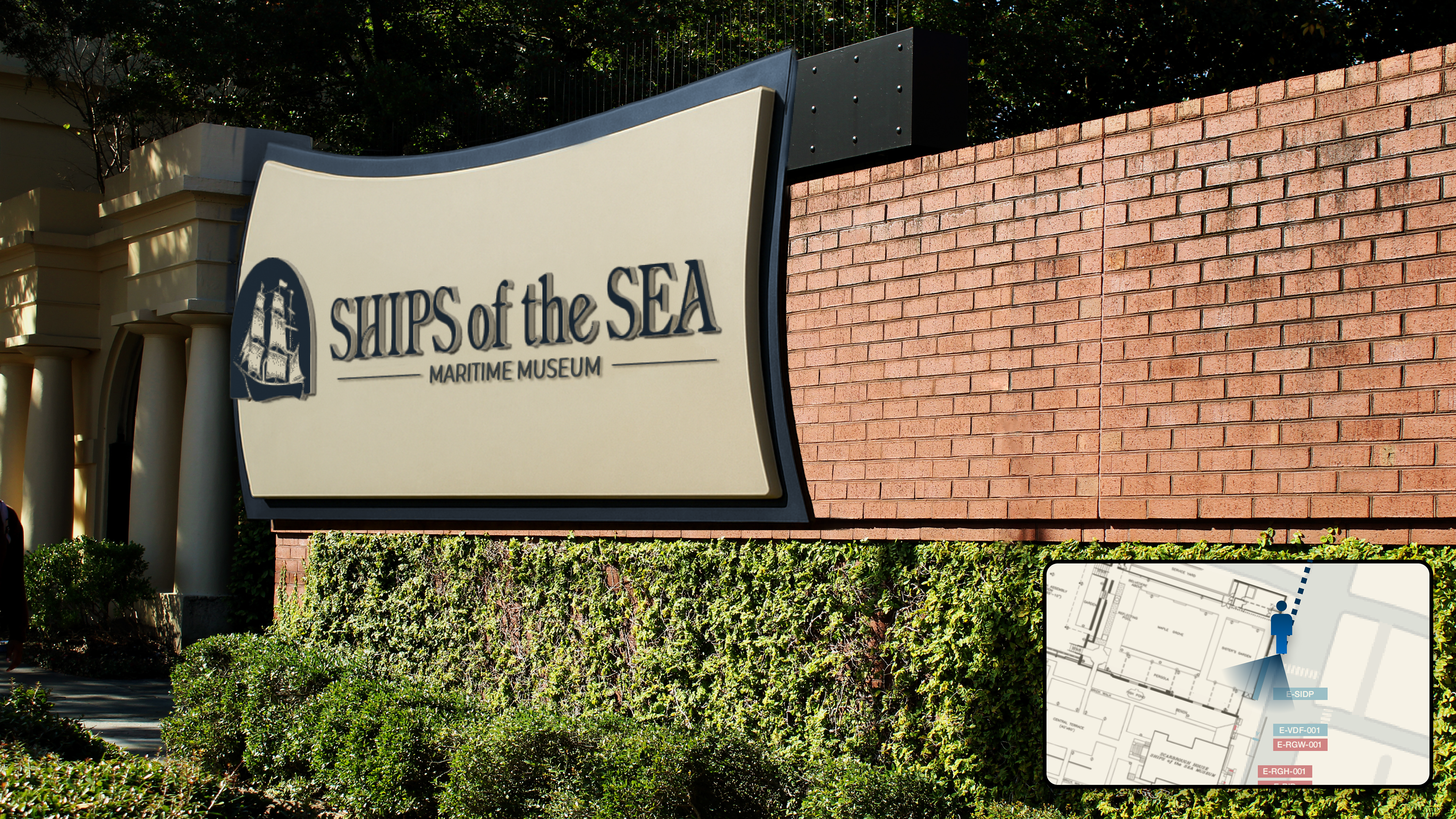
Ships of the Sea Maritime Museum brings together several distinct experiences: its maritime collection, the historic William Scarbrough House, and its event garden. While each space had its own character, inconsistent signage and visual communication made it difficult for visitors to understand how everything connected, or even spot the museum and garden from the street. Our team saw an opportunity to create a unified experience that could make the museum more visible, easier to navigate, and more connected to its unique history and architecture.
Goal
As a branding, wayfinding, and process documentarian on the team, my goal was to create a fresh and adaptable visual system that could bring the museum's different spaces together while still allowing each one to retain its own character. I also wanted to make sure our process and proposal were documented clearly and professionally, giving the museum a strong handoff package they could use to communicate the vision, advocate for renovations, and pursue future funding.
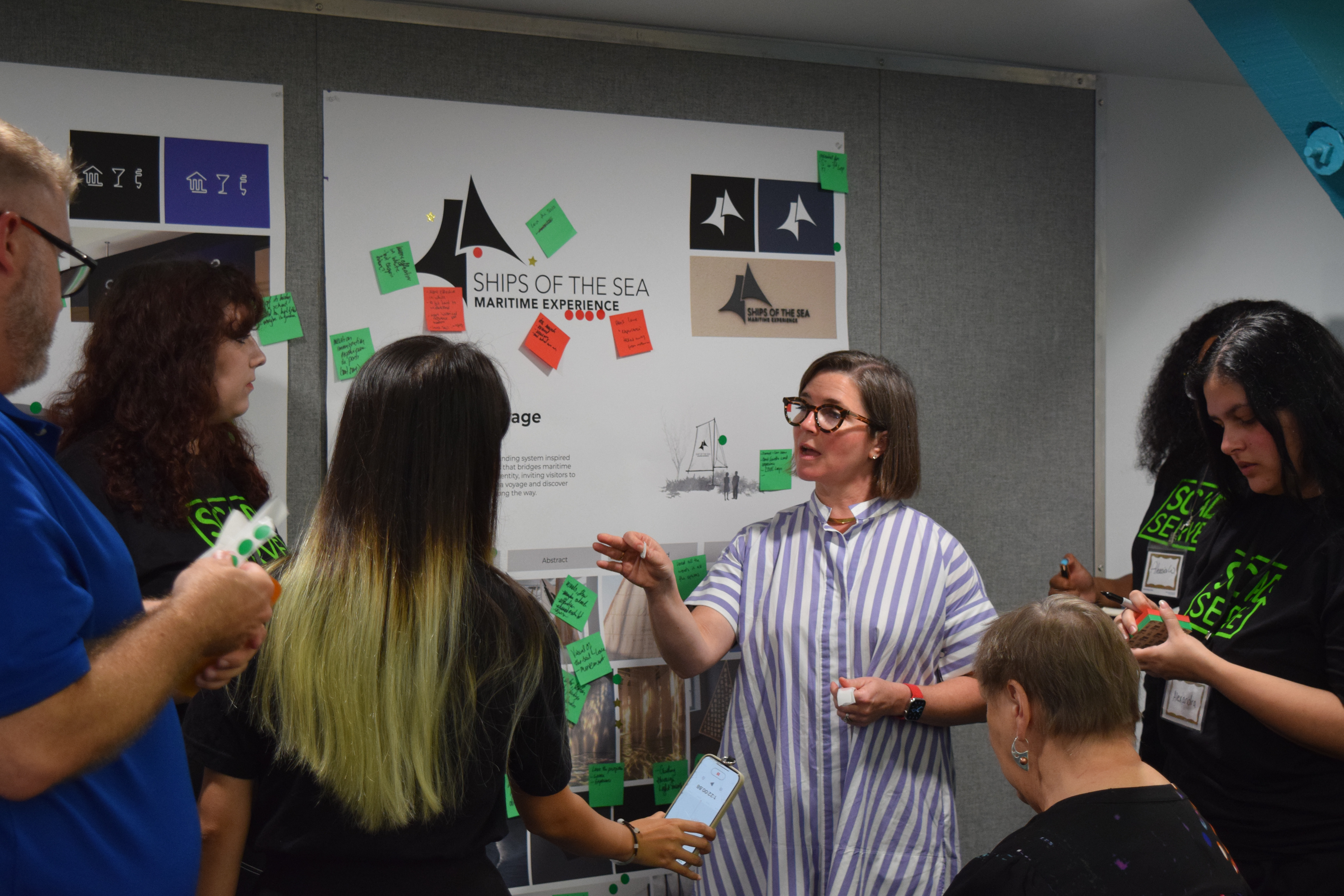
Midterm feedback session: Sharing three visual directions with the museum team and gathering one-on-one feedback to guide our final direction.
process
We started by stepping into the museum as visitors ourselves, observing how people moved through the site and where they paused, looked for information, or seemed unsure of where to go. Throughout the project, we worked closely with the museum team through multiple rounds of one-on-one feedback, sharing branding and visual concepts and refining our direction together. These conversations helped us develop an identity that could honor the museum's past, reflect where it is today, and create a vision for where it could go next!
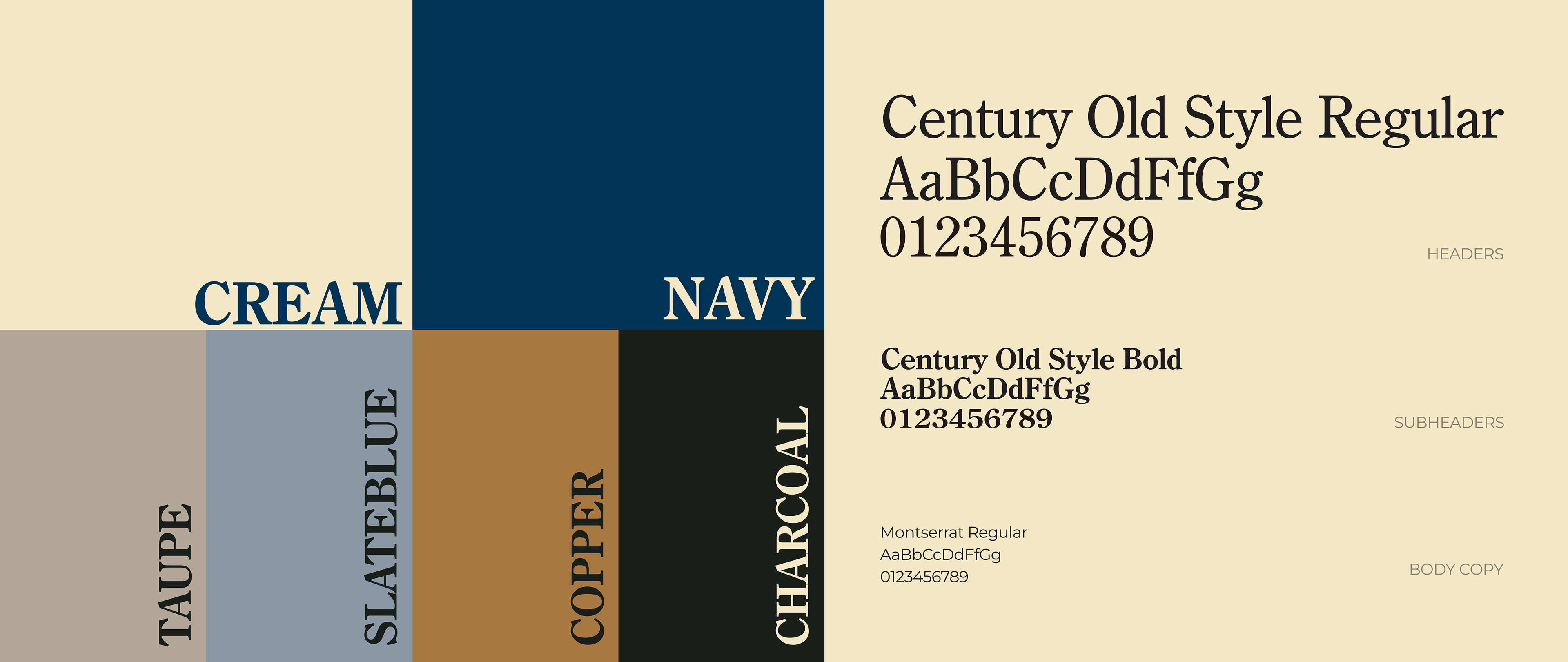
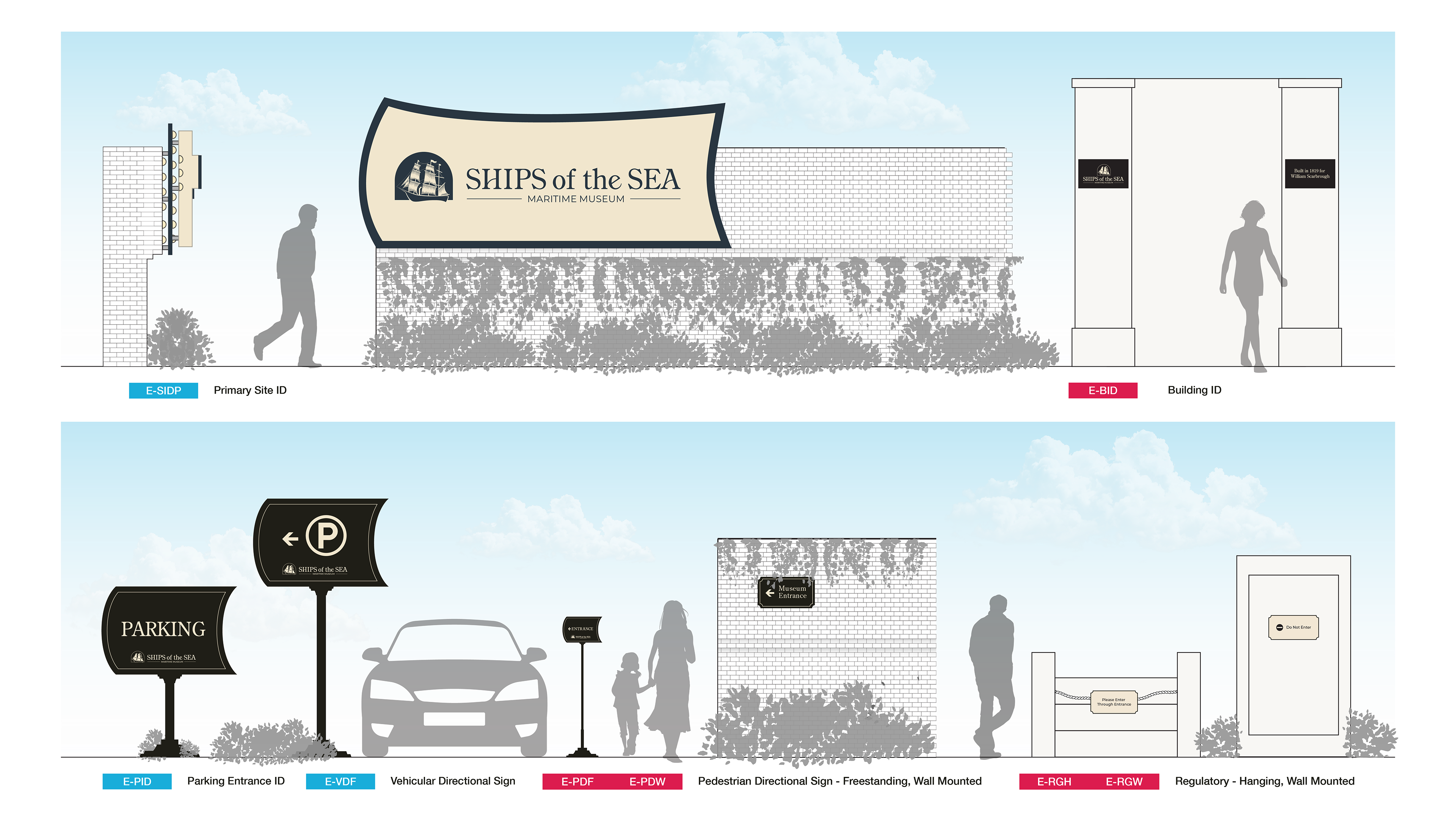
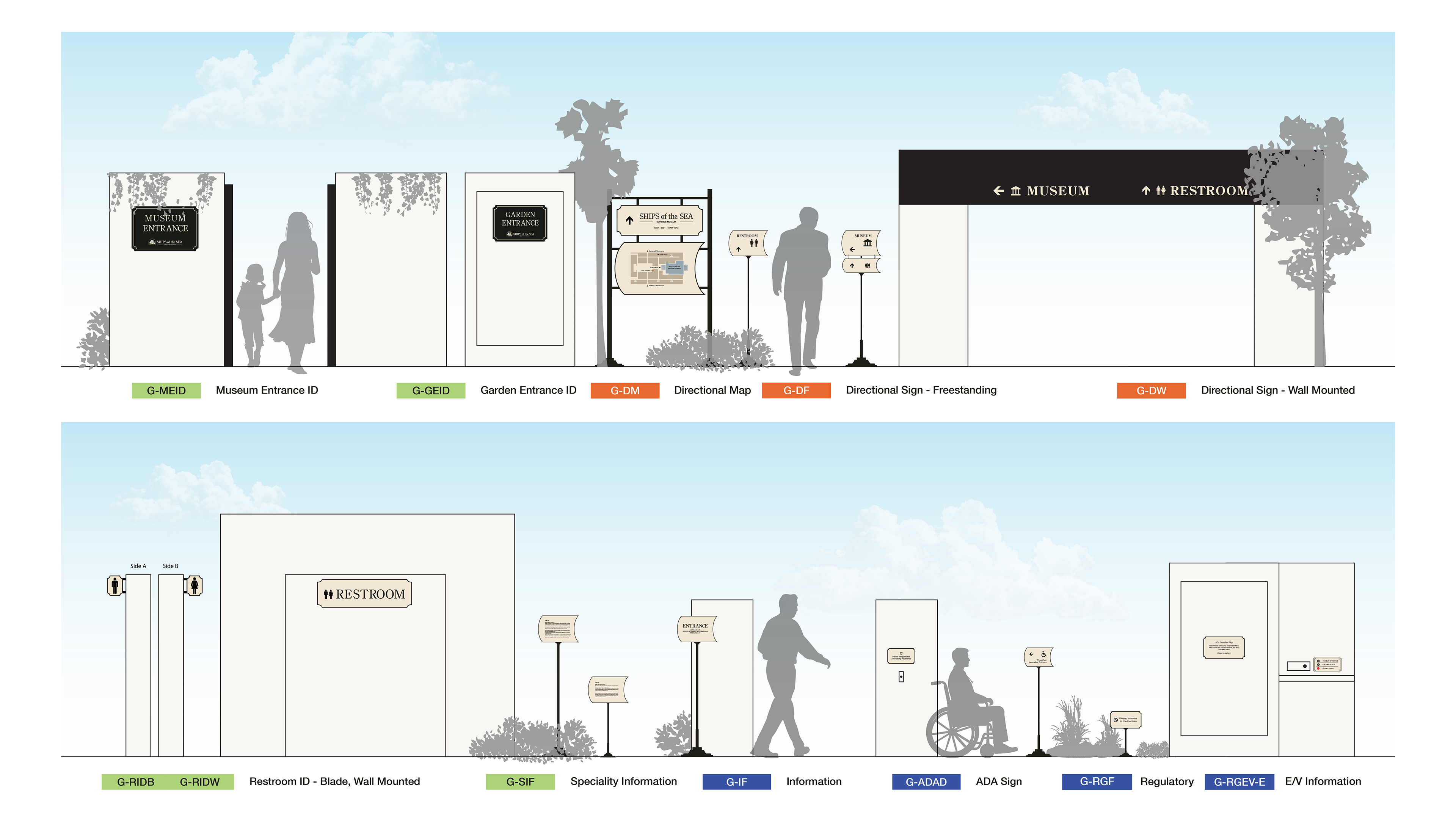
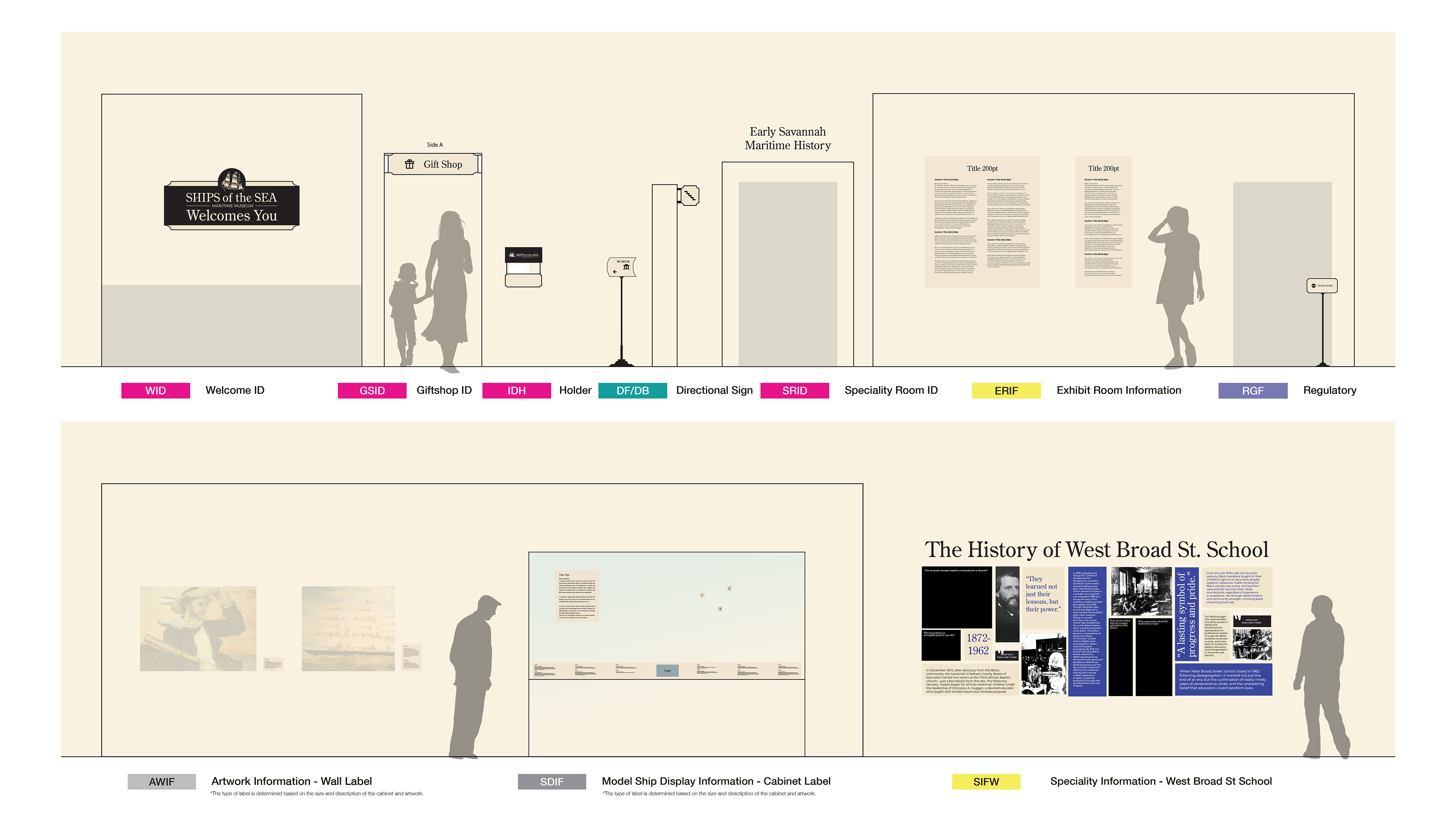
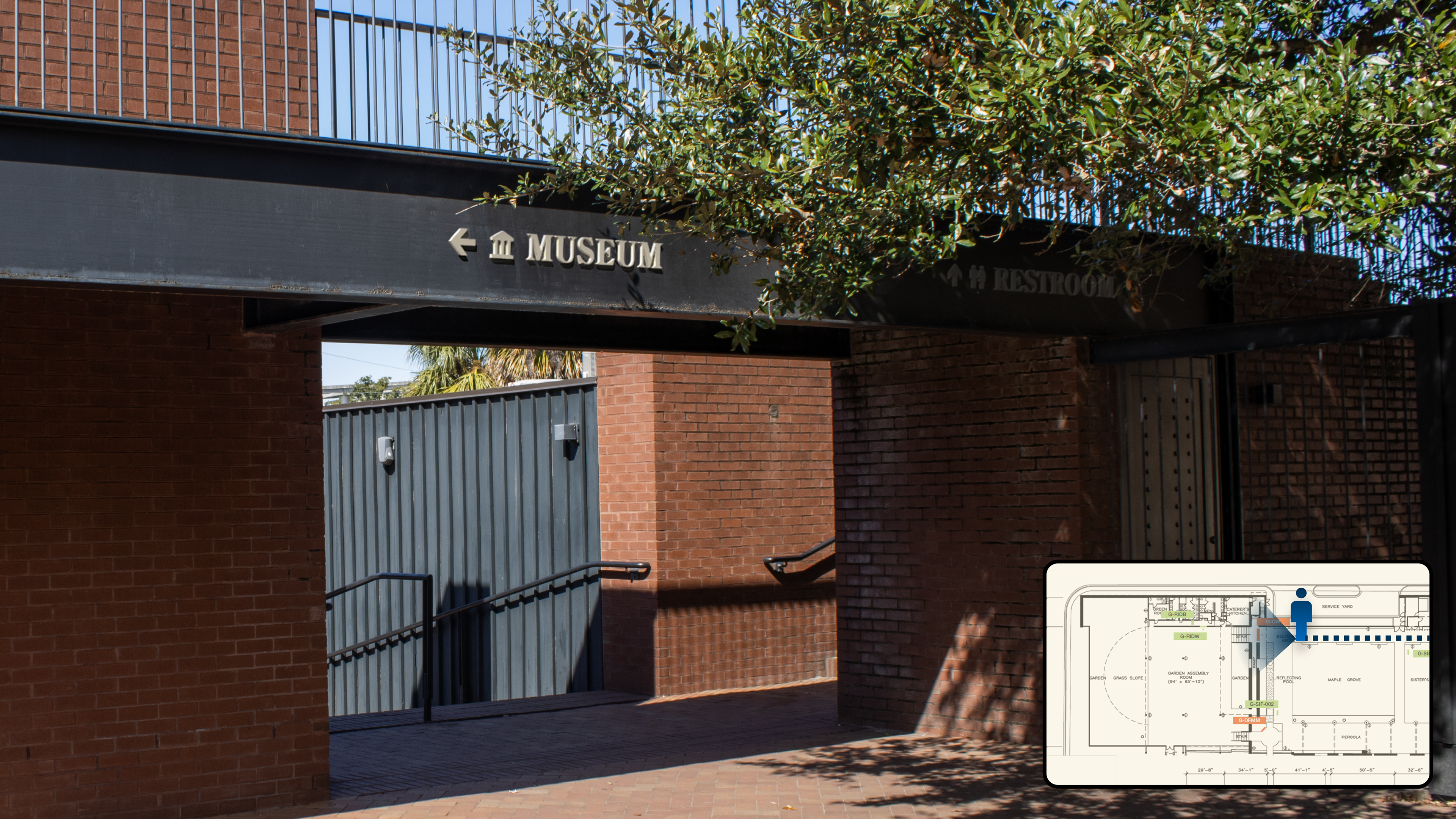
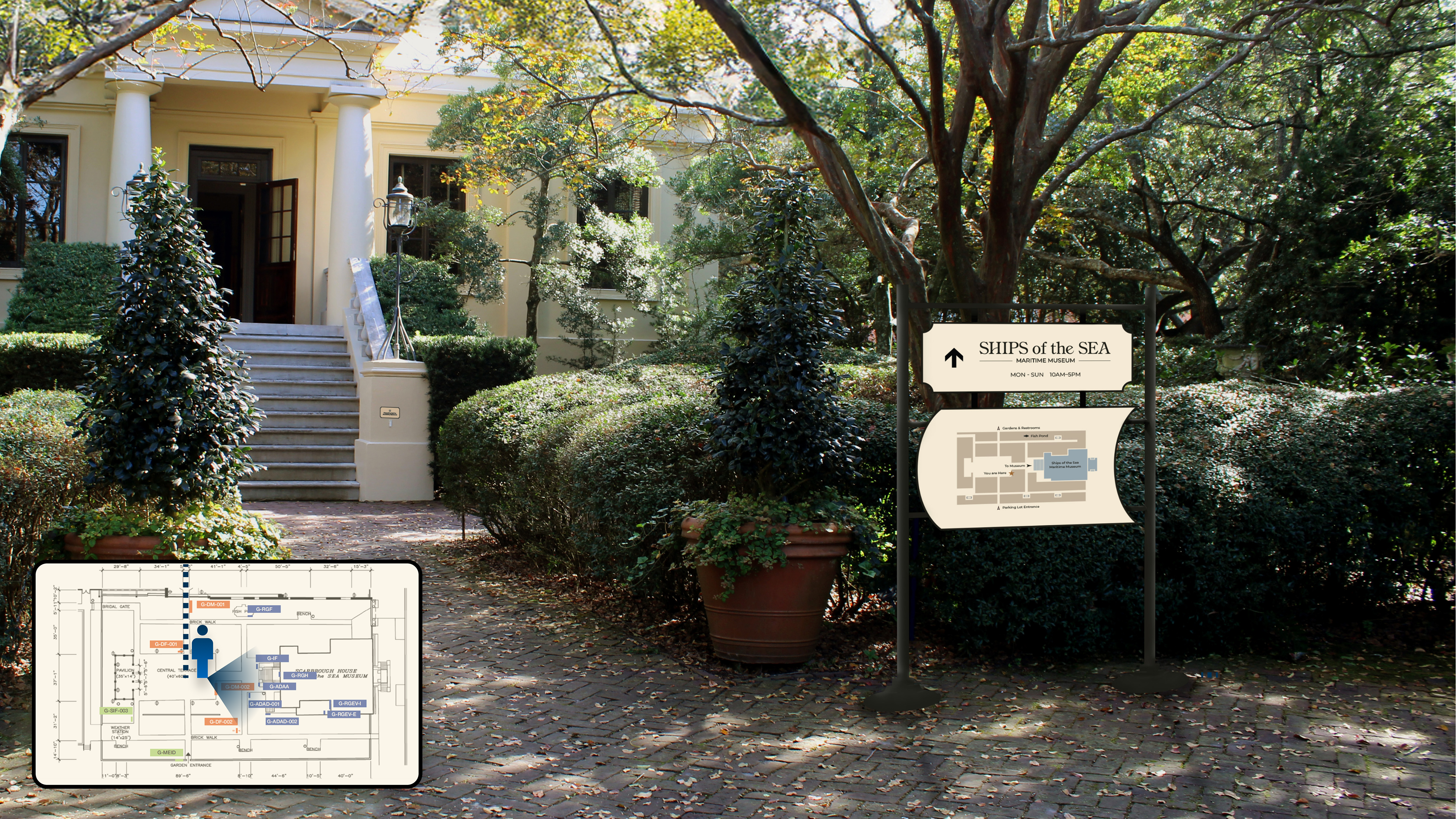
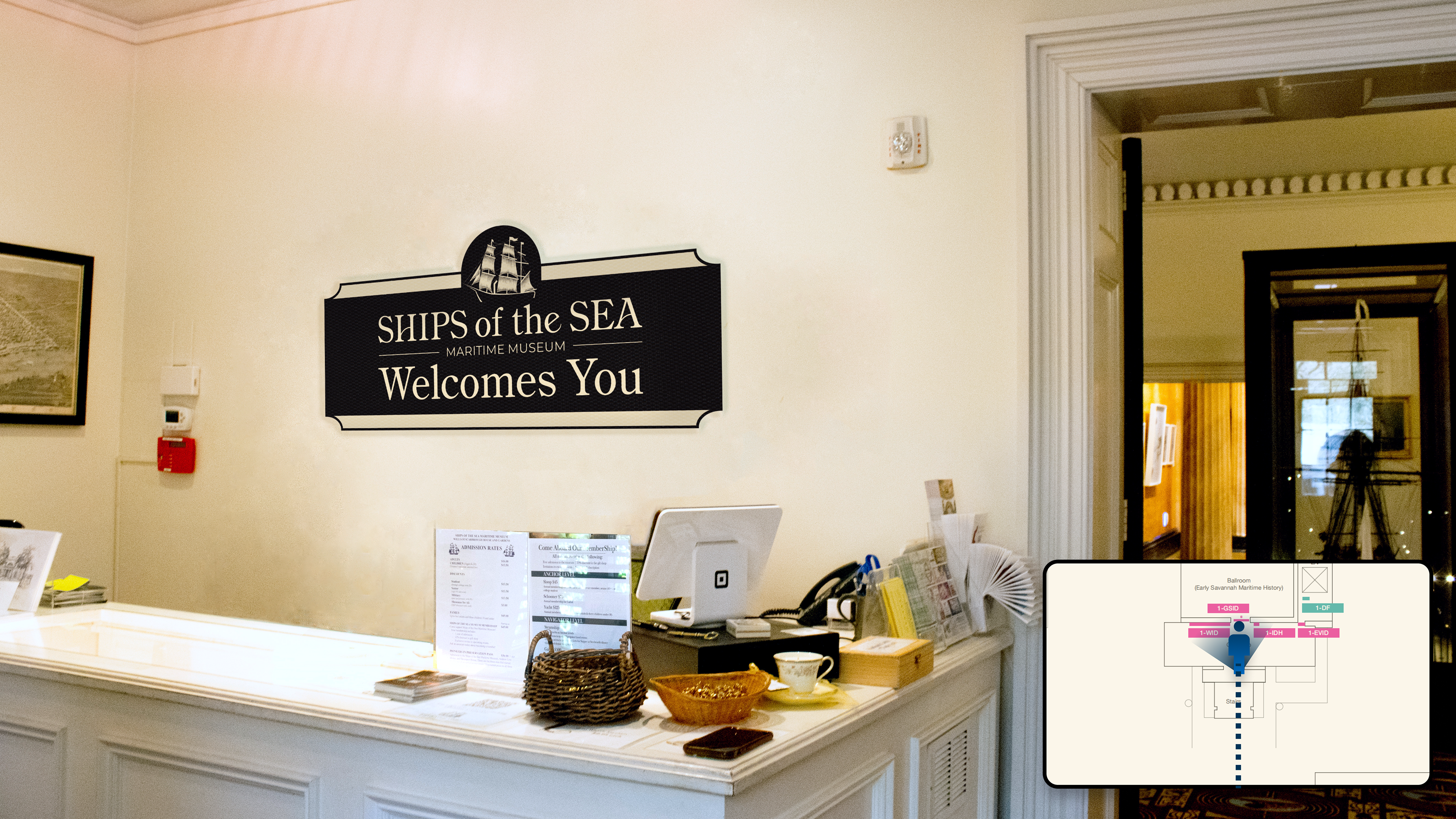
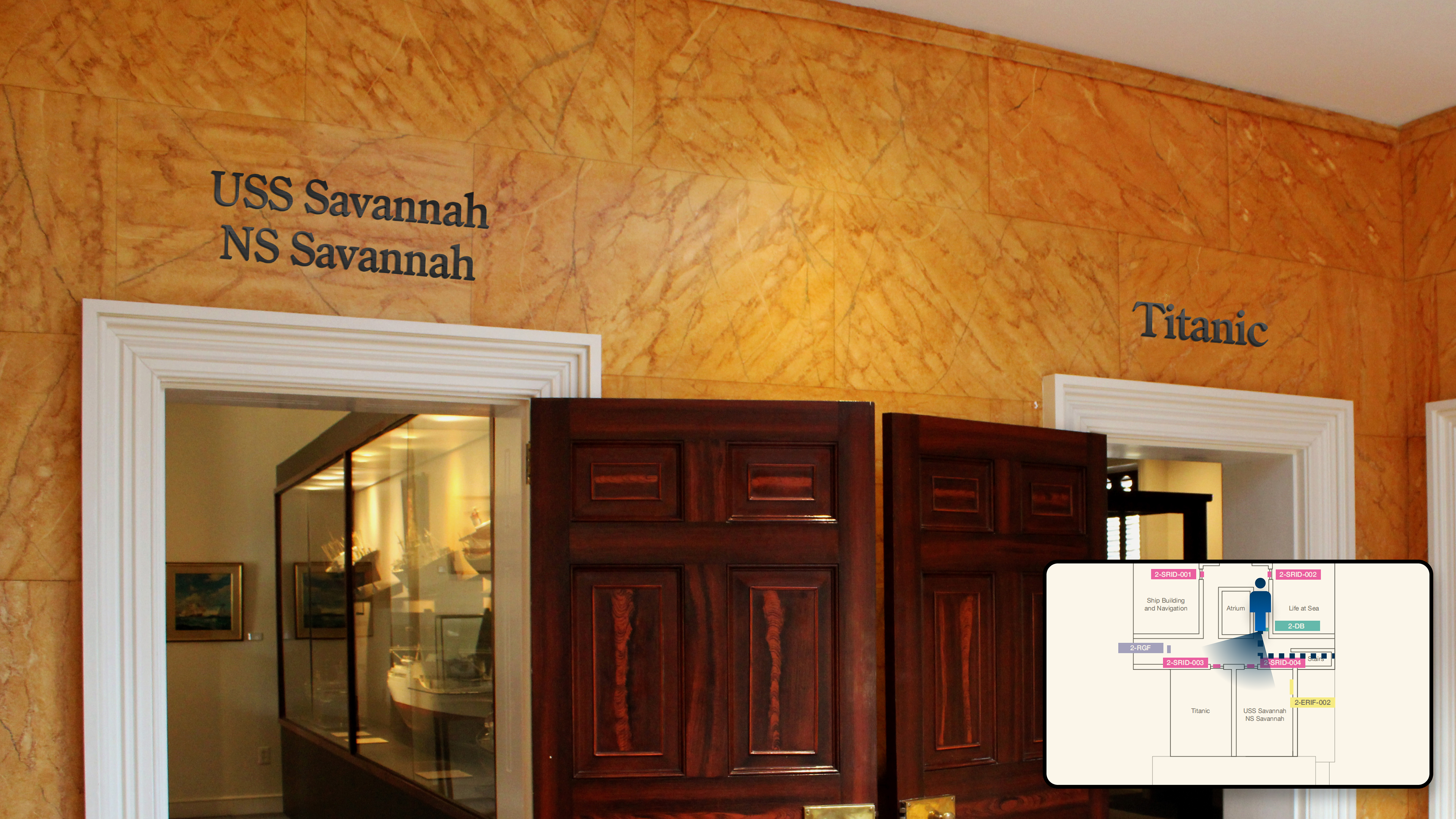
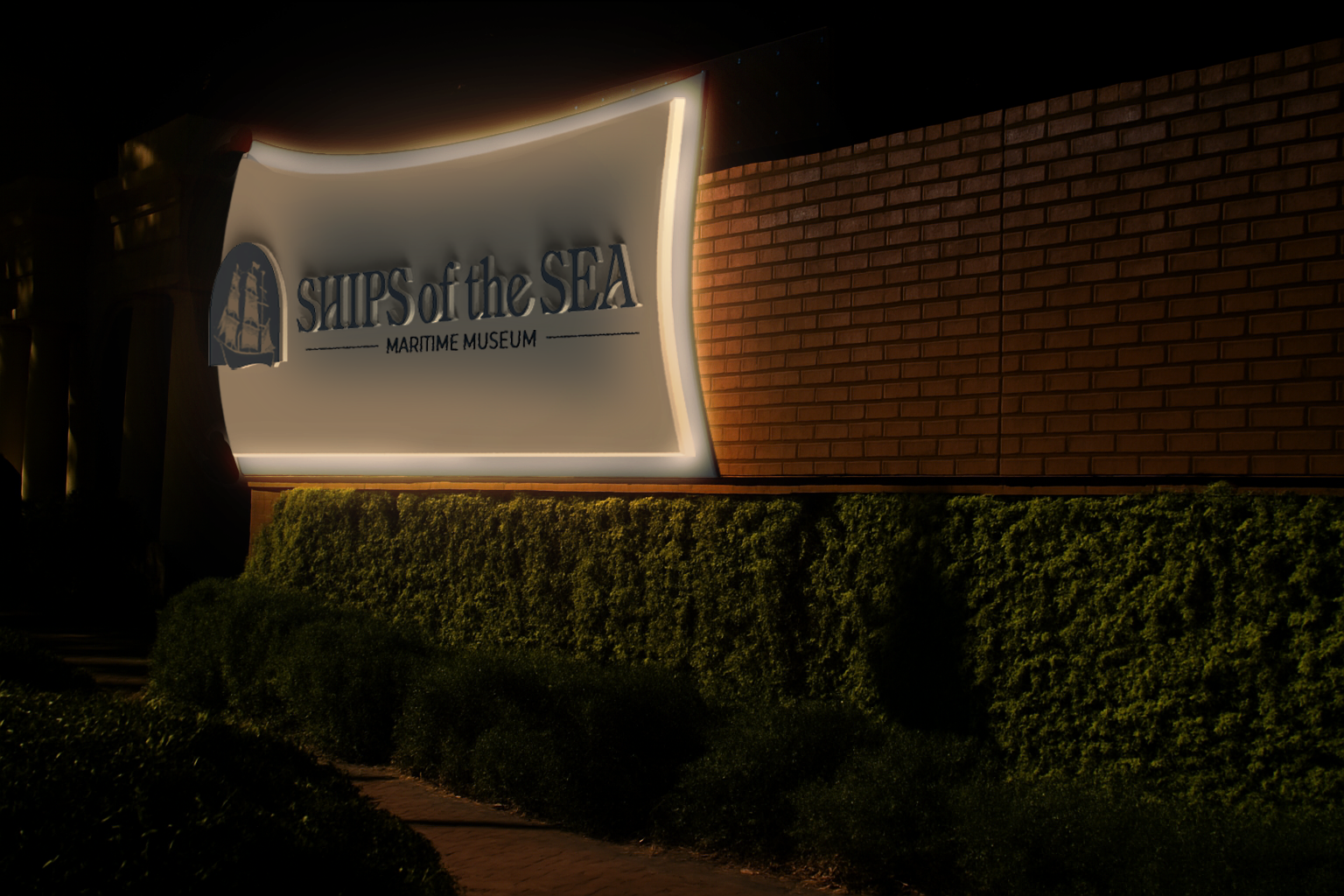
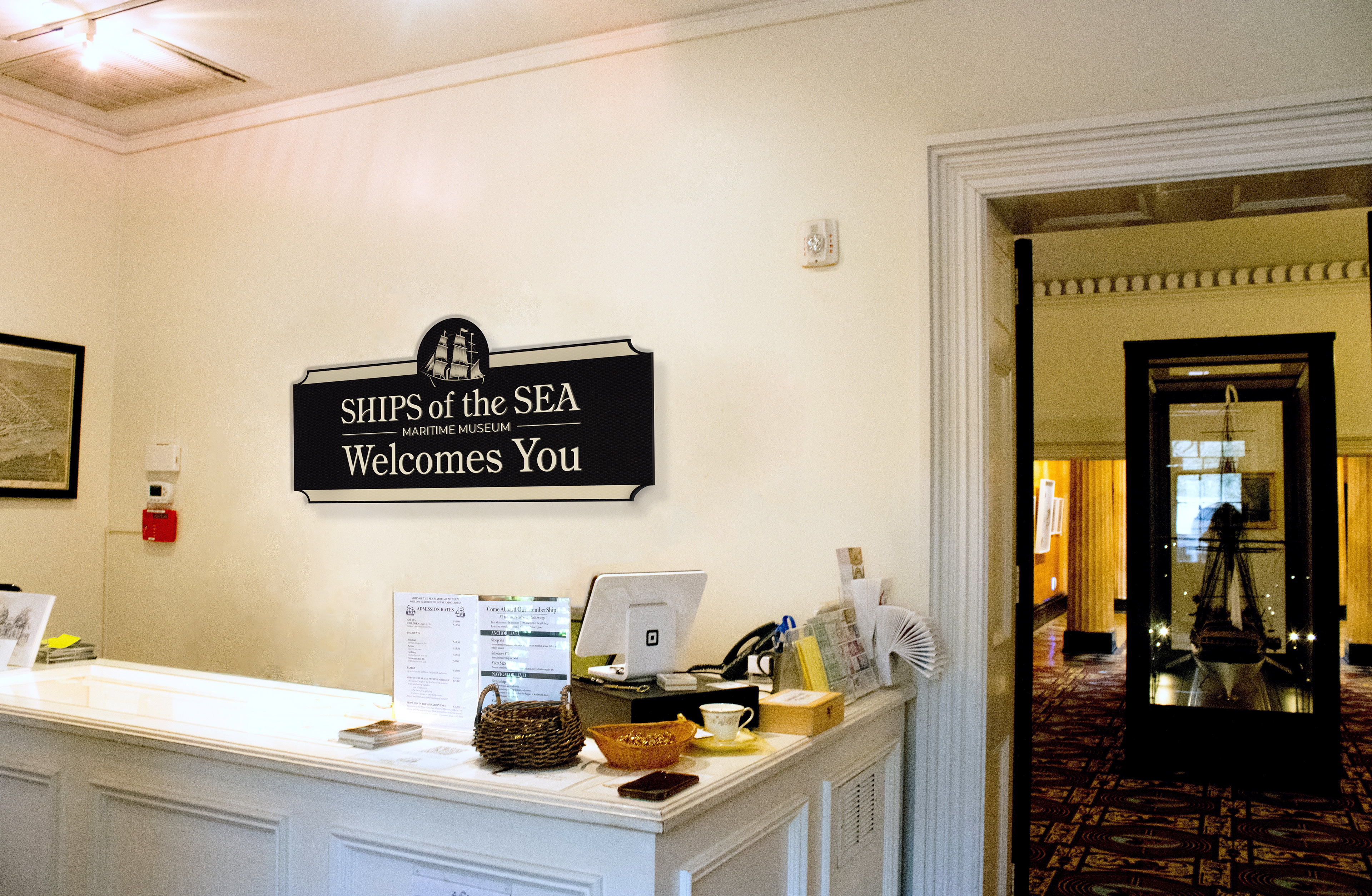
In my role, I helped bring the system to life through a wide range of design and presentation work. I conducted visitor shadow studies, developed the refreshed logo and brand system, created wayfinding and room-signage concepts, sourced materials for concept and material boards, and produced environmental mockups using final site photography. I also organized and designed our presentation materials and ultimately compiled the team's research, concepts, and final proposal into a comprehensive process book that could carry the project forward beyond our presentation.
Outcome
Our final proposal gave Ships of the Sea a cohesive visual direction for connecting its buildings, exhibits, garden, and visitor experience. The refreshed identity and wayfinding system created a clearer path through the museum while giving the team a flexible foundation for future signage, communications, and renovations. During our final presentation, the museum responded positively to the selected direction and expressed interest in moving the proposal toward implementation, giving the project momentum beyond the classroom and a tangible vision to help support future funding efforts.